Celebrating 100 years of Protein Crystallography & Structural Biology!
Enzymes Are Proteins! First Crystals.
The story of protein crystallography and structural biology began 100 years ago, in 1926, when the first crystals of urease were obtained. Additionally, thanks to the author of the first publication, we know the exact date this occurred. It was April 29th when he discovered the crystals! Since then, protein crystallography and structural biology have developed into mature sciences with many exciting discoveries and Nobel Prizes these fields have earned. In this post, I briefly discuss some of the early achievements of protein crystallography along with references to the respective publications.
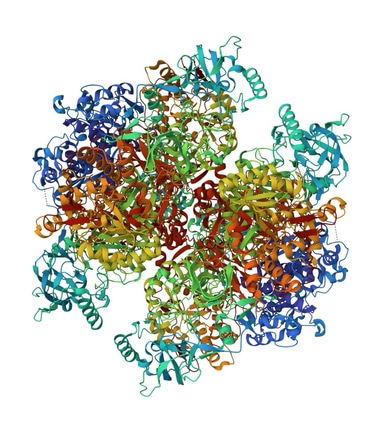
On June 2, 1926, a manuscript by James B. Sumner (Department of Physiology and Biochemistry, Cornell University Medical College, Ithaca) titled “THE ISOLATION AND CRYSTALLIZATION OF THE ENZYME UREASE” was received for publication in J. Biol. Chem. In the introduction, the author writes, “I discovered on the 29th of April a means of obtaining from the jack bean a new protein which crystallizes beautifully and whose solutions possess to an extraordinary degree the ability to decompose urea into ammonium carbonate“. This was the first published protein crystallization report, and the first time protein crystals were described as “beautiful”, an expression so familiar to all protein crystallographers! In 1946 James Sumner was awarded the Nobel Prize in Chemistry for “for his discovery that enzymes can be crystallized”. The crystal structure of the jack bean urease was published by A. Balasubramanian and K. Ponnuraj in 2010. The paper was dedicated to the memory of Professor James B. Sumner.
At a time when proteins were thought to be a type of colloids, Sumner demonstrated that they possessed a well-defined and stable atomic structure and could crystallize. Additionally, he showed that enzymes were actually proteins. Another remarkable publication of 1926 was by T. Svedberg and R. Fåhraeus, published in JACS with the title “A new method for the determination of the molecular weight of the proteins”, in which, for the first time, the molecular weight of hemoglobin was determined by analytical ultracentrifugation to be 66 kDa. Theodor Svedberg was awarded the Nobel Prize in Chemistry in 1926 for his work confirming Einstein’s theory of Brownian motion by providing evidence of the physical existence of molecules and for developing the ultracentrifuge.
First X-ray Diffraction. Oxford Housewife Wins Nobel.
Eight years later, in 1934, the first report of X-ray diffraction by a protein crystal was published in a Nature paper by J. D. Bernal and D. Crowfoot, titled “X-ray photographs of crystalline pepsin”. The authors mention that the protein was crystallized by Dr. Philpot in the Laboratory of Prof. The Svedberg in Uppsala and brought to Cambridge by Dr. G. Millikan. It was also the first time it was realized that protein crystals had to be kept in their mother liquor to obtain diffraction. To do that, the crystals were mounted in a glass capillary, a method used for many years in protein crystallography until cryo-freezing arrived in the 1990ties. It should be noted here that Dorothy Crowfoot Hodgkin, in 1934, reported in a Nature paper, “X-ray single photographs of insulin”, that the first insulin crystals were also obtained in 1926. Dorothy Hodgkin was awarded the 1964 Nobel Prize in Chemistry for her work on solving the structures of penicillin (1946) and vitamin B12. The British newspaper The Daily Mail ran the famous headline “Oxford housewife wins Nobel”. In 1969, Dorothy Hodgkin solved the crystal structure of insulin.
Hemoglobin and Myoglobin: The Birth of Structural Biology
Still, the world had to wait 24 more years until the first protein structure was finally determined. After solving the phase problem, J. C. Kendrew et al., in 1958, reported the structure of myoglobin, and in 1960, M. F. Perutz et al. published the structure of hemoglobin. In 1962, they were awarded the Nobel Prize in Chemistry. This marked the beginning of a long chain of Nobel Prizes awarded for work in structural biology. The most recent Prize was in 2024, awarded for the development of computational methods for protein structure prediction. The statement distributed by the Nobel Committee says, “David Baker has succeeded with the almost impossible feat of building entirely new kinds of proteins. Demis Hassabis and John Jumper have developed an AI model to solve a 50-year-old problem: predicting proteins’ complex structures”.
Since the first protein crystals were obtained, protein crystallography and structural biology has developed into an interdisciplinary field within modern biological sciences that uses a variety of complementary biophysical techniques to study biological structures and functional processes at the atomic level. And most importantly, other methods like cryo-electron microscopy and NMR spectroscopy, both complementary to X-ray crystallography, have been developed for protein 3D structure determination. Many Nobel Prizes have been awarded for research based on results obtained through protein crystallography and structural biology. In the coming months, I will revisit this topic to discuss other notable achievements of protein crystallography and structural biology more broadly.
Please visit my educational pages for additional information on protein crystallization, protein X-ray crystallography, and experimental methods in structural biology.